
Helping every investor recover their rightful financial assets smoothly and securely.


Experienced IEPF Experts
Years of expertise in shares recovery and IEPF claims.















We help you recover your unclaimed shares, physical share certificates and investments from IEPF with complete transparency, legal expertise and personalized support.
 100% Transparent
 Expert Legal Assistance
 PAN India Support


No of Investors Assisted
Shares value recovered
No of Company's dealt with
Shares Dispute Resolved
Helping every investor recover their rightful financial assets smoothly and securely.

Did you forget about your physical shares investments?

Have physical shares? Let’s value them.

IEPF 5 SRN rejected? Let us assist you in getting it approved.

Tired and still unable to claim your physical shares?
Let’s unlock your physical shares’ value.
Was your IEPF claim rejected? Let us assist you in getting it approved.
Helping you recover the wealth your loved ones built.
Are you also facing trouble claiming your shares into your demat?
Your IEPF claim was rejected? Let us help you get it approved.
We assist you in recovering unclaimed Shares from Investor Education Protection Fund Authority (IEPF). Our IEPF shares recovery experts provide solutions to get back the lost share certificates and assist in transfer of shares, obtaining duplicate share certificates, which is hassle free and less time consuming.
Helping every investor recover their rightful financial assets smoothly and securely.




We understand your requirements and provide expert guidance.

We verify documents for accuracy and compliance.

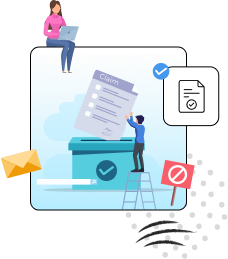
We file claims with IEPF and related authorities.


Recovered shares are transferred safely to your demat account.

Years of expertise in shares recovery and IEPF claims.

We serve investors across India with ease.

Clear communication and transparent workflow.

Quick and accurate documentation support.

Personalized assistance at every step.

Your documents and information remain completely secure.

Check that old file, that drawer, that safe locker.
If you find share certificates — or even if you just remember an old investment — we can take it from there.
Reclaim your Shares from Today!!






Physical share certificates were once the standard form of holding equity investments in India, and even today, many investors or their families still possess them. Over time, these certificates may get misplaced, damaged, or lost due to relocation, old records not being maintained, or simple oversight. The loss of a share certificate can create anxiety, especially when shareholders are unaware of the correct legal steps to report the loss and apply for a duplicate. However, Indian company law and registrar procedures clearly define how such cases should be handled. With the right documentation and process, shareholders can protect their ownership rights and obtain duplicate certificates without dispute. This blog explains the current, legally accepted process to inform companies about the loss and obtain a replacement in a clear and practical manner.
Understanding Loss of a Share Certificate
Loss of a share certificate refers to a situation where the original physical document issued by the company cannot be located. This may occur due to theft, accidental disposal, fire, or general misplacement over time. Since physical certificates represent proof of ownership, companies require confirmation that the certificate is genuinely lost and not misused. This is why formal intimation and legal declarations are necessary before issuing a duplicate certificate.
Immediate Intimation to the Company or Registrar
Once the loss is identified, the shareholder should immediately inform the company or its Registrar and Transfer Agent. Written communication is preferred, mentioning details such as the shareholder’s name, folio number, certificate number if available, and the number of shares held. Upon receiving this information, the company usually marks the certificate as “stop transfer” to prevent misuse. This step protects the shareholder’s interest while further formalities are completed.
Filing a Police Complaint
A police complaint or First Information Report is generally required as proof that the loss has been formally reported. Some companies accept a non-cognisable complaint for this purpose. The complaint should clearly state the loss of the share certificate and relevant details. This document plays a critical role in confirming that the loss is genuine and helps safeguard against fraudulent claims.
Submission of Affidavit and Indemnity Bond
To proceed further, shareholders are required to submit an affidavit declaring the loss of the certificate and confirming that it has not been pledged or transferred. Along with this, an indemnity bond must be executed, often on stamp paper of prescribed value. The indemnity bond protects the company against any future claims arising from the lost certificate. These documents must be duly notarised and submitted in the format specified by the company or registrar.
Public Notice Requirement
In many cases, especially where the value of shares is significant, companies ask shareholders to publish a public notice in a widely circulated newspaper. This notice invites objections, if any, regarding the lost certificate. If no objections are received within the specified period, the company proceeds with issuing a duplicate. This step adds an additional layer of verification and transparency to the process.
Verification and Issuance of Duplicate Certificate
After receiving all required documents, the registrar verifies the details with company records. Once satisfied, the company issues a duplicate share certificate, usually marked clearly as “Duplicate Issued in Lieu of Original Certificate Lost.” As per current regulations, companies are required to issue duplicate certificates within prescribed timelines after completion of documentation. Charges for issuance may apply, depending on company policy.
Role of Dematerialisation in Lost Certificate Cases
SEBI has encouraged dematerialisation of shares, and many companies now issue duplicate certificates with a recommendation to dematerialise them immediately. Demat conversion reduces the risk of future loss and simplifies ownership records. Shareholders may choose to dematerialise the duplicate certificate through a Depository Participant once it is issued.
Challenges Faced During the Process
Shareholders often face delays due to incomplete documentation, mismatch of signatures, or outdated KYC details. In older cases, lack of folio information or company mergers adds complexity. Families handling inherited shares may find the process difficult without proper guidance. In such situations, assistance from a share recovery agent can help coordinate documentation, follow up with registrars, and reduce procedural confusion.
Importance of Accuracy and Compliance
Accuracy in documents and compliance with company instructions are essential. Any discrepancy can result in rejection or repeated submissions. Keeping copies of all correspondence, acknowledgements, and published notices is advisable until the duplicate certificate is issued and recorded.
Conclusion
The loss of a share certificate can be stressful, but it is a recoverable situation under Indian corporate regulations. By promptly informing the company, completing legal formalities, and submitting accurate documents, shareholders can safeguard their ownership rights. Awareness of the process reduces fear and prevents unnecessary delays. As companies move towards dematerialisation, handling physical certificates carefully and converting them to digital form is a practical step. For shareholders or families who find the procedure overwhelming, professional assistance can simplify communication and documentation. In such cases, experienced service providers like Shares Recover help navigate the process with clarity and consistency.
Many shareholders are unaware that their shares or dividends may have been transferred to the Investor Education and Protection Fund due to years of inactivity. This situation often arises when dividends remain unclaimed, addresses are not updated, or shareholders pass away without proper succession planning. Once assets move to the IEPF, investors assume recovery is difficult or impossible. In reality, the Ministry of Corporate Affairs has laid down a clear legal framework that allows rightful owners and heirs to reclaim their shares and unpaid dividends. With the correct understanding of procedures, documentation, and timelines, recovery is very much achievable. This blog explains how IEPF claims work, why shares are transferred, and how investors can take informed steps to reclaim what is rightfully theirs.
What Is the Investor Education and Protection Fund?
The Investor Education and Protection Fund was established under the Companies Act, 2013, and is administered by the Ministry of Corporate Affairs. Its purpose is to safeguard investor interests and manage unclaimed amounts such as dividends, matured deposits, debentures, and shares. When dividends remain unpaid or unclaimed for seven consecutive years, companies are required to transfer the corresponding shares and unpaid dividends to the IEPF Authority. These assets are held in trust until the rightful owner or legal heir submits a valid claim.
Why Shares and Dividends Become Unclaimed
IEPF unclaimed shares usually result from a lack of communication between shareholders and companies. Common reasons include change of address without updating records, loss of physical share certificates, death of the shareholder without nomination, or ignorance about dividend credit. In older investments, especially those held in physical form, families often discover shares only years later. Once the statutory period of seven years lapses, companies have no choice but to transfer such shares and dividends to the IEPF.
Legal Basis for Recovery of IEPF Assets
The law clearly recognises the right of shareholders and heirs to recover assets transferred to the IEPF. Rule 7 of the IEPF Authority (Accounting, Audit, Transfer and Refund) Rules, 2016, provides the mechanism for making a claim. The claimant must prove entitlement and comply with verification requirements laid down by the Authority and the concerned company. This legal backing makes the recovery process legitimate and structured, rather than discretionary.
The IEPF Claim Process Explained
To initiate recovery, the claimant must file Form IEPF-5 online through the Ministry of Corporate Affairs portal. This form captures details of the claimant, company, shares, and dividend amounts. After submission, an acknowledgement is generated, which must be sent to the company along with supporting documents. The company verifies the claim, checks records, and submits a verification report to the IEPF Authority. Upon satisfaction, the Authority approves the claim and initiates the transfer of shares to the claimant’s demat account and dividends to the registered bank account.
Documents Required for IEPF Claims
Documentation plays a critical role in successful claims. Shareholders generally need identity proof, address proof, shareholding details, demat account information, and a cancelled cheque. Legal heirs must additionally submit succession-related documents such as a succession certificate, probate of will, or legal heir certificate, depending on the case. Signature verification and indemnity bonds are often required to protect against future disputes. Any mismatch or omission can delay the process, making accuracy essential.
Timeframe and Current Regulatory Practices
As per current practices, companies are expected to verify claims and submit reports within stipulated timelines. However, actual processing time may vary depending on the completeness of documents and complexity of the case. Recent regulatory emphasis has been on stricter KYC norms and dematerialisation. Shares are now credited only in demat form, which requires claimants to have an active demat account before approval.
Common Challenges Faced by Claimants
Many claimants face difficulties due to incomplete share details, old folio numbers, or company mergers that have changed registrar records. In inherited cases, absence of nomination increases documentation requirements. Errors in online form submission or mismatches in signatures also lead to repeated queries. These challenges often discourage individuals from pursuing claims independently, even though the value involved may be substantial.
Role of Professional Assistance
Given the procedural and legal nature of IEPF recovery, many investors seek help from IEPF claim consultants. Such professionals assist in tracing shared history, preparing accurate documentation, coordinating with companies, and responding to queries raised during verification. While the process is legally defined, professional guidance helps reduce delays and procedural confusion, particularly in complex or old cases.
Importance of Updating Shareholding Records
Preventing transfer to IEPF is always preferable to recovery after the fact. Regularly updating contact details, bank accounts, and demat information with companies helps avoid unclaimed dividends. Registering a nomination and converting physical shares to demat form significantly reduces future complications for family members.
Conclusion
IEPF claims provide a lawful route for investors and heirs to recover shares and dividends that were transferred due to prolonged inactivity. Although the process involves detailed documentation and multiple verification steps, it is transparent and backed by statutory provisions. Awareness of why shares are transferred, how claims are filed, and what challenges may arise helps claimants approach recovery with clarity and patience. With careful preparation and compliance, even long-forgotten investments can be reclaimed. For individuals who find the process complex or time-consuming, experienced assistance can make a meaningful difference, as demonstrated by the services offered by Shares Recover.

As investing becomes increasingly organised through demat accounts, many investors find themselves needing to move shares from one account to another. This could be due to consolidation of holdings, gifting shares to family members, or reorganising investments across multiple demat accounts. Although the system is digital, the transfer of shares between accounts is governed by clear regulatory rules laid down by SEBI and implemented through depositories such as NSDL and CDSL. A lack of understanding about the correct process, applicable charges, or realistic timelines often leads to confusion and delays. This blog explains how share transfer between accounts works in practice, outlining the procedure, costs involved, and expected timelines so investors can proceed with clarity and proper preparation.
Understanding the Transfer of Shares Between Demat Accounts
The transfer of shares between demat accounts is a voluntary process initiated by the account holder. It may involve transferring shares between two accounts held by the same individual or between two different individuals. Unlike market trades, these transfers do not involve price discovery or exchange settlement. Instead, they are processed directly through the Depository Participant, making accuracy in details a critical requirement.
Common Situations Requiring Share Transfer
Investors often initiate transfers to consolidate multiple demat accounts into one for easier management. Transfers are also common when shares are gifted to family members, moved as part of inheritance planning during one’s lifetime, or shifted between individual and joint accounts. In corporate and partnership arrangements, share transfer between accounts may also occur as part of internal restructuring.
Process of Share Transfer Between Accounts
The process begins with the account holder submitting a transfer request to their Depository Participant. This is usually done through a Delivery Instruction Slip, which includes details such as the ISIN, number of shares, target demat account number, and name of the recipient. Some Depository Participants allow digital submission through online platforms linked to the depository.
Once submitted, the DP verifies the information against depository records. If the details match and the shares are free from restrictions, the request is processed electronically. Any mismatch in account details, signatures, or ISIN numbers may lead to rejection or delay.
Online and Offline Transfer Methods
Offline transfer involves physically submitting the Delivery Instruction Slip at the DP office. This method is still used by investors who prefer paper-based instructions. Online transfer facilities, such as those offered by NSDL and CDSL through their authorised platforms, allow faster execution and reduce manual errors. While the mode differs, regulatory requirements remain the same for both methods.
Documentation and Compliance Requirements
Even though the transfer is electronic, documentation remains important. The sender’s demat account must be active and fully KYC-compliant. In transfers involving different individuals, especially gifts, some DPs may ask for supporting declarations for record purposes. Signature verification and account status checks are standard measures to prevent the unauthorised movement of shares.
Charges Applicable to Share Transfer
Charges for share transfer between accounts vary depending on the Depository Participant. Most DPs charge a fixed fee per transfer instruction or per ISIN. Offline requests often attract higher charges compared to online submissions. Depositories levy nominal charges that are usually passed on to the investor through the DP.
Stamp duty may apply in certain off-market transfers, particularly when shares are transferred for consideration. While stamp duty collection is automated for market transactions, off-market transfers may still attract duty based on the nature of the transfer and applicable state laws. Investors should confirm charges with their DP beforehand to avoid surprises.
Timeline for Completion of Share Transfer
Under normal circumstances, the transfer of shares between demat accounts is completed within one to three working days after submission and verification. Online transfers may be processed even faster, sometimes within a single working day. Delays may occur if account details are incorrect, KYC is incomplete, or shares are temporarily restricted due to corporate actions.
Regulatory guidelines require Depository Participants to act promptly on valid instructions, but the actual timeline depends on the accuracy of the request and account status.
Tax Considerations Related to Transfer of Shares
Tax implications depend on the nature of the transfer. Gifting shares to specified relatives is generally exempt from tax under current income tax provisions. When shares are transferred without consideration, tax liability usually arises only when the recipient sells the shares in the future. Maintaining proper records of transfer dates and original acquisition costs is important for future compliance.
Common Issues Faced by Investors
Incorrect ISIN details, inactive demat accounts, or mismatches in names are common causes of transfer failure. Shares under lock-in or corporate action restrictions cannot be transferred until the restriction is lifted. Verifying all details in advance significantly reduces the risk of rejection.
Conclusion
Share transfer between accounts is a regulated and widely used process that supports flexible management of investments. Understanding the correct procedure, expected charges, and realistic timelines helps investors complete the transfer of shares without unnecessary delays. With proper documentation and verified account details, most transfers are completed quickly and efficiently. However, older holdings, documentation gaps, or procedural confusion can complicate the process. In such situations, professional assistance can provide valuable coordination and clarity. Investors facing such challenges often seek guidance from experienced service providers like Shares Recover to manage share-related processes with confidence.
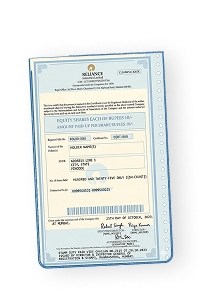
Speak with our experts today and begin your recovery journey confidently.

Shares Recovery Expertise
 WhatsApp us